As you all know, with the rising heat waves across the world, it has become a necessity to buy an air conditioner, and nowadays, buying an air conditioner is not as simple as picking a box off the shelf. Between new efficiency rules, changing refrigerants, and smart features, there is a lot to think about before buying an AC.
Here is a simple breakdown to help you choose the right unit.
How to Choose a AC Smartly
Before anything else, focus on cooling capacity. Air conditioners are rated in BTUs, and you want a unit that matches your room size, not one that is too big or too small.
If you get an air conditioner that’s too large, it will chill the room before it can remove the humidity, leaving you cold and clammy.

A unit that is too small will run constantly and still fail to cool properly. Many brands now offer sizing calculators, and for central systems, a professional load calculation is the most reliable way to get this right.
Efficiency Ratings
The second basic priority should be energy efficiency. Inverter compressors, which adjust their speed instead of just turning fully on or off, use less power and cost less to run over time.
New regulations have also raised the bar. Since January 2026, most central air systems sold must meet a minimum efficiency level called SEER2, which is roughly 10 to 15 percent higher than older standards.
It is a benefit for the customers as Higher SEER2 ratings mean lower electricity bills, especially in hot climates.
Know About the Refrigerant Change
There has been a major shift in the chemicals used to cool your home. Older units used a refrigerant called R-410A, which has a high impact on global warming.
New units mostly use R-32 or R-454B, which are considered more environmentally friendly. This change is now required for new equipment, so most current models already use the newer refrigerants.
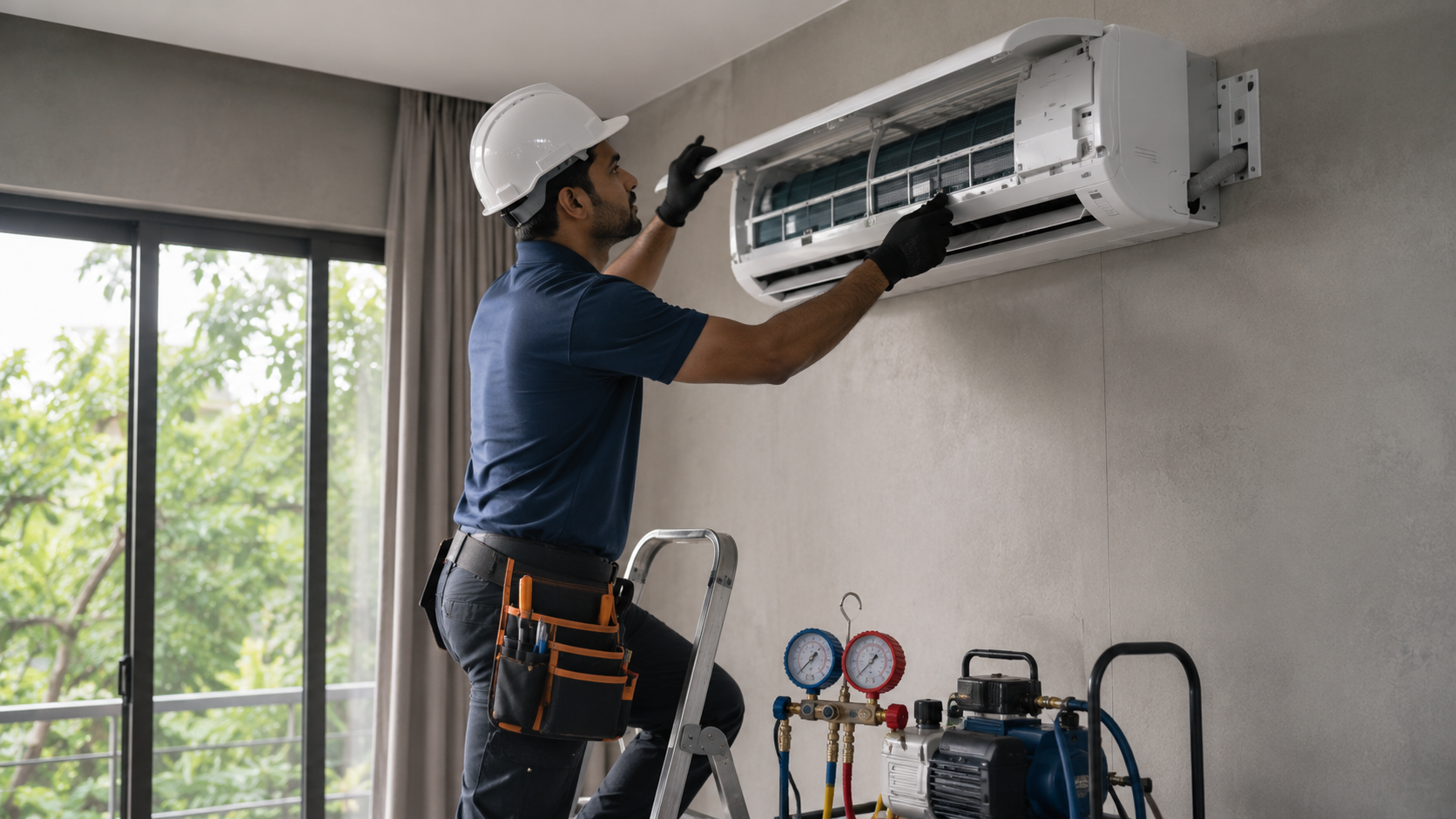
If you are hiring someone to install a system, make sure they are properly certified to handle these refrigerants safely, since improper handling can void your warranty.
Smart Features Worth Having
Wi-Fi connectivity and app control have become standard rather than a luxury.
With the smart features and a dedicated app, you can schedule cooling, adjust the temperature remotely, and connect the unit to voice assistants like Alexa or Google Assistant.

Other than that, some higher-end models also include occupancy sensors that adjust cooling based on whether someone is in the room, and a few units can even communicate with your power utility to reduce strain during high-demand periods.
Before buying, it helps to test the manufacturer’s app if possible. A clunky or confusing app will only get more frustrating after purchase, so check how it handles scheduling and whether it works when your internet connection drops.
Do Not Ignore Air Quality
Many buyers now look beyond just cooling and pay attention to air filtration, too. Look for filters rated MERV 13 or HEPA that can actually be replaced or cleaned.
Avoid sealed filters that cannot be swapped out, since they lose effectiveness over time and cannot be upgraded.
Types of Systems to Consider
There are a few common options depending on your home. Window units are the cheapest and easiest to install, good for renters or single rooms. Portable units offer flexibility but tend to be less efficient.
Ductless mini splits work well for homes without existing ductwork and offer strong performance with lower energy use.
The best option for cooling an entire home is always central air conditioning, especially if ductwork is already in good shape.
Ready to Chill This Summer?
Smart features are nice to have, but they should never come before the basics.
Get the sizing and efficiency right first, choose a system that fits your home’s structure, and then add smart controls as a bonus.
This approach will save you more money and frustration than chasing the flashiest app or the longest feature list.
FAQs
How do I choose the right AC capacity for my room?
Match the AC’s BTU rating to your room’s size, insulation, and sun exposure, since an undersized unit won’t cool properly and an oversized one will leave the air cold but damp.
Which is better: a smart AC or an inverter AC?
They’re not competing features, since inverter refers to an efficient compressor that saves energy, while smart refers to app and voice control, so the best units usually combine both.
What should I check before buying a smart AC?
Check the BTU size, energy efficiency rating, refrigerant type, filter quality, app usability, and noise level before you buy.