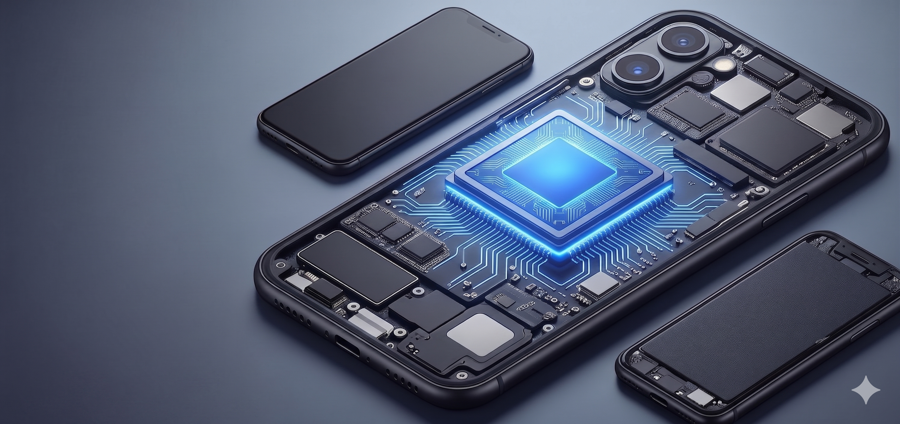
Smartphones in 2026 have truly evolved into intelligent gadgets that can not only translate live conversations with a single tap but also help summarize calls or generate AI wallpapers directly on the device. Powering all these is a powerful piece of hardware — the NPU (or Neural Processing Unit).
In fact, NPU in smartphones has become one of the most important components and powers the AI experiences that make today’s smartphone feel faster and more intuitive than ever before.
Why Smartphones Need NPUs in 2026
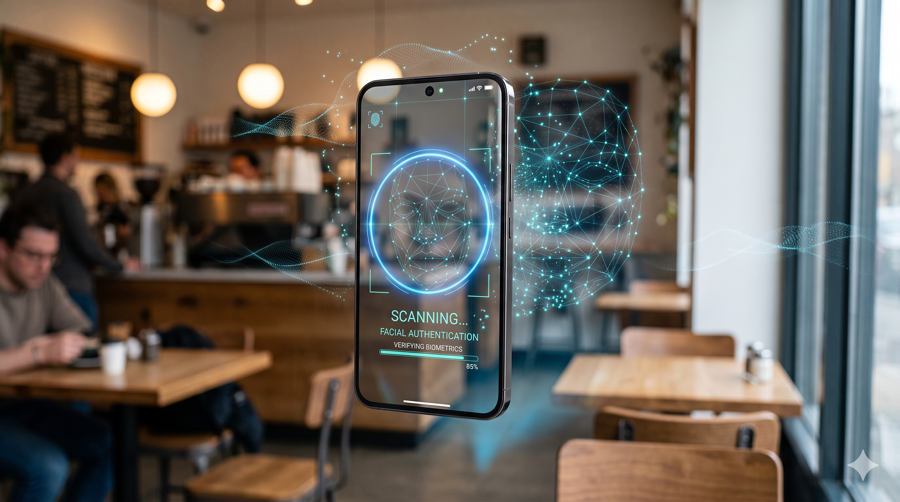
Today, AI has become central to the smartphone experience. While a few years ago AI mainly powered camera enhancements and voice assistants, it is now deeply integrated into almost every part of the phone. From face detection and scene recognition to HDR optimization in photos, the NPU in your smartphone takes care of most of these tasks.
Earlier, these tasks were offloaded to the CPU/GPU. While they could perform the same functions, it came at the expense of battery power and performance, resulting in slower performance.
As a matter of fact, modern flagship phones from companies like Apple and Samsung, along with processor manufacturers like Qualcomm and MediaTek, now market AI performance as aggressively as camera quality or battery life.
This is primarily because AI workloads are extremely demanding, and they are expected to increase even further as more and more tasks come under the AI umbrella. Features like AI photo editing, live transcription, AI-powered search, smart battery optimization, and even real-time language translation require billions of calculations to happen instantly.
As we mentioned above, a regular CPU can certainly do these tasks, but it would consume more power and perform more slowly. NPUs are optimized specifically for these AI operations, making them dramatically more efficient.
How Does an NPU Actually Work?
Now, here is where things get interesting. An NPU is designed to accelerate neural network operations by repeating huge numbers of matrix calculations. And generic CPUs are not optimized for this type of repetitive workload.
So, instead of handling tasks sequentially like CPUs, NPUs can process AI operations simultaneously and this speeds up the inference process, thus generating results faster. For instance, when you point your smartphone camera at food, your phone instantly recognizes the scene and adjusts colors, exposure, and sharpness automatically.
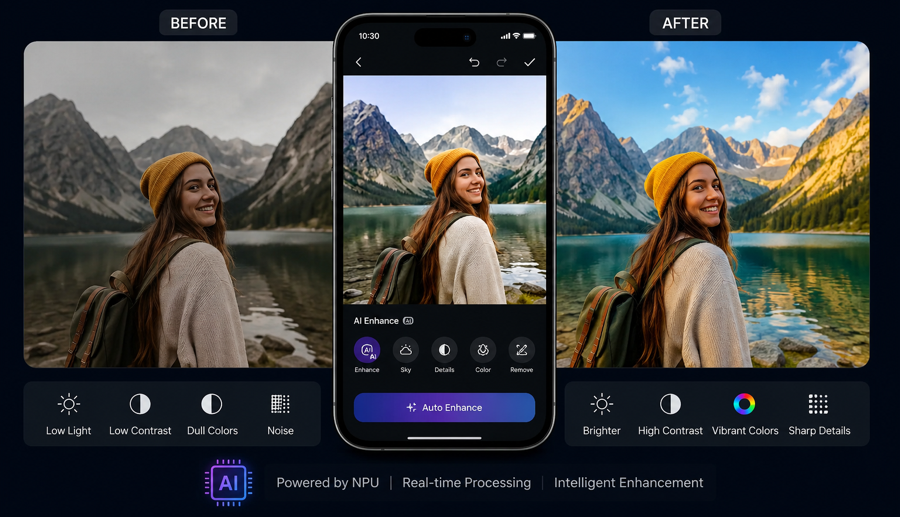
That entire process occurs in milliseconds because the NPU runs trained AI models in real time. Most of the flagship smartphones’ NPU is optimized for Tensor operations, AI inferencing, and low-power machine learning tasks. All these allows phones to run sophisticated AI models while consuming minimal battery power.
NPU vs CPU vs GPU: What Is the Difference?
The average CPU in smartphones is versatile and can handle a variety of tasks, such as opening apps, browsing the web, managing the operating system, playing songs while you browse X. However, it’s not optimized for AI.
On the other hand, the GPU (aka Graphics Processing Unit) is built to handle graphics rendering and parallel processing.GPUs are way better at handling AI workloads than CPUs, and as such, they are better because they can process multiple operations simultaneously. This is why GPUs became essential in AI training.
AI Photography
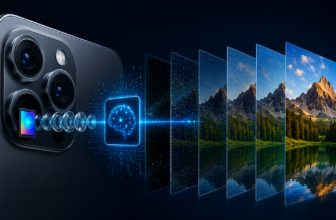
One of the biggest use cases of NPUs in smartphones is computational photography. When you capture a photo, the NPU plays a big part in reducing noise, improving skin tones, enhancing HDR, and detecting scenes automatically.
This is the reason why modern smartphone cameras often outperform older DSLR cameras in low-light conditions.
At the same time, features like live captions, AI call summaries, and real-time translation rely heavily on NPUs. So, instead of sending your voice data to cloud servers, phones can now process speech directly on-device.
What Does “TOPS” Mean in AI Smartphones?
If you follow smartphone launches, you must have heard about TOPS AI Performance. TOPS or Trillions of Operations Per Second measures how many AI calculations a chipset can perform every second. So higher TOPS usually mean faster AI processing and better generative AI support.
But at the end of the day, TOPS is not everything, and actual real-world AI performance also depends on the phone’s software optimization, memory bandwidth, and the AI model’s efficiency as well. Thus, a smartphone with lower TOPS but better optimization can still outperform competitors in everyday use.
On-Device AI Is the Future
It’s 2026, and AI capabilities are becoming a major differentiator between budget and premium smartphones. So if you are someone who often relies on AI photo editing, voice assistants or translation tools, among others, then it makes sense to buy a smartphone with a dedicated NPU.
Interestingly, the AI wave will not be limited to just these features. In upcoming smartphones, the NPU is expected to support additional features like personalized AI assistants, real-time video generation, and even multi-modal AI processing, transforming mobile intelligence