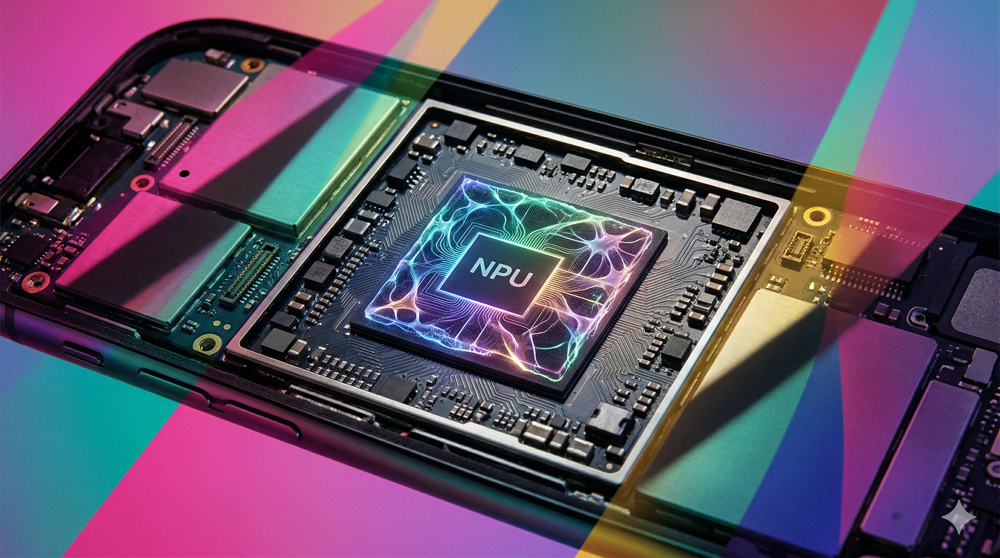
A Brief Overview
– On-device AI runs artificial intelligence directly on your phone’s chip.
– A dedicated Neural Processing Unit (NPU) handles tasks like photo editing, live translation, scam detection, and email summarisation.
– On-device AI results in better privacy and zero dependence on an internet connection.
If you have been checking out the specs of some of the recent smartphones and tablets, two of the most standout features are on-device AI and larger battery life. Indeed, these two topics have hogged the headlines since the start of this year. In fact, on-device AI is one of the biggest differentiators between a good phone and a great one.
So, what is on-device AI, and how is it different from the AI your phone has always used? Is it worth paying good money for? Well, that is what we will check out in this post below.
What Is On-Device AI in Smartphones?
As suggestive of its name, on-device AI is artificial intelligence that runs entirely on a local device. It could be anything like a smartphone, laptop, tablet, or wearable. And it makes this possible by using a dedicated chip called a Neural Processing Unit (NPU).
The NPU processes data locally, without sending it to a remote server. This makes AI faster, more private, and usable without an internet connection.
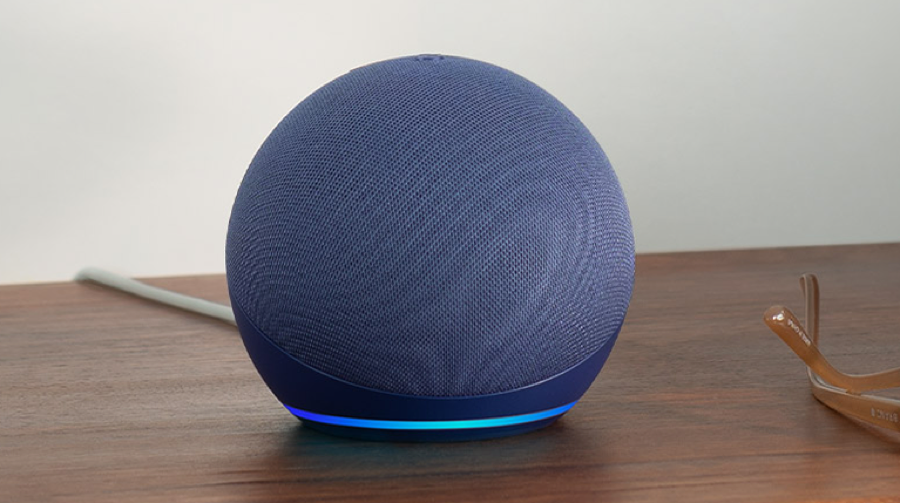
So if you ask a voice assistant, like the Amazon Echo Dot, a question, your voice travels to a server somewhere, gets processed, and then the answer comes back to you. With on-device AI, that entire process happens inside your phone, in milliseconds, and privately.
On-Device AI vs Cloud AI: What Is the Difference?
| Feature | On-Device AI | Cloud AI |
|---|---|---|
| Internet Required | No | Yes |
| Response Speed | Faster (no round trip) | Slower (depends on connection) |
| Privacy | Data stays on your phone | Data sent to remote servers |
| Power Consumption | Optimised on modern chips | Dependent on connectivity |
| Capability Ceiling | Smaller models | Larger, more powerful models |
What Is an NPU and Why Does It Matter?
The NPU, or Neural Processing Unit, is the specialised brain designed exclusively for AI tasks. Unlike general-purpose processors that handle everything from gaming to web browsing, the NPU focuses solely on AI computations like image recognition, natural language processing, predictive analytics, and more.
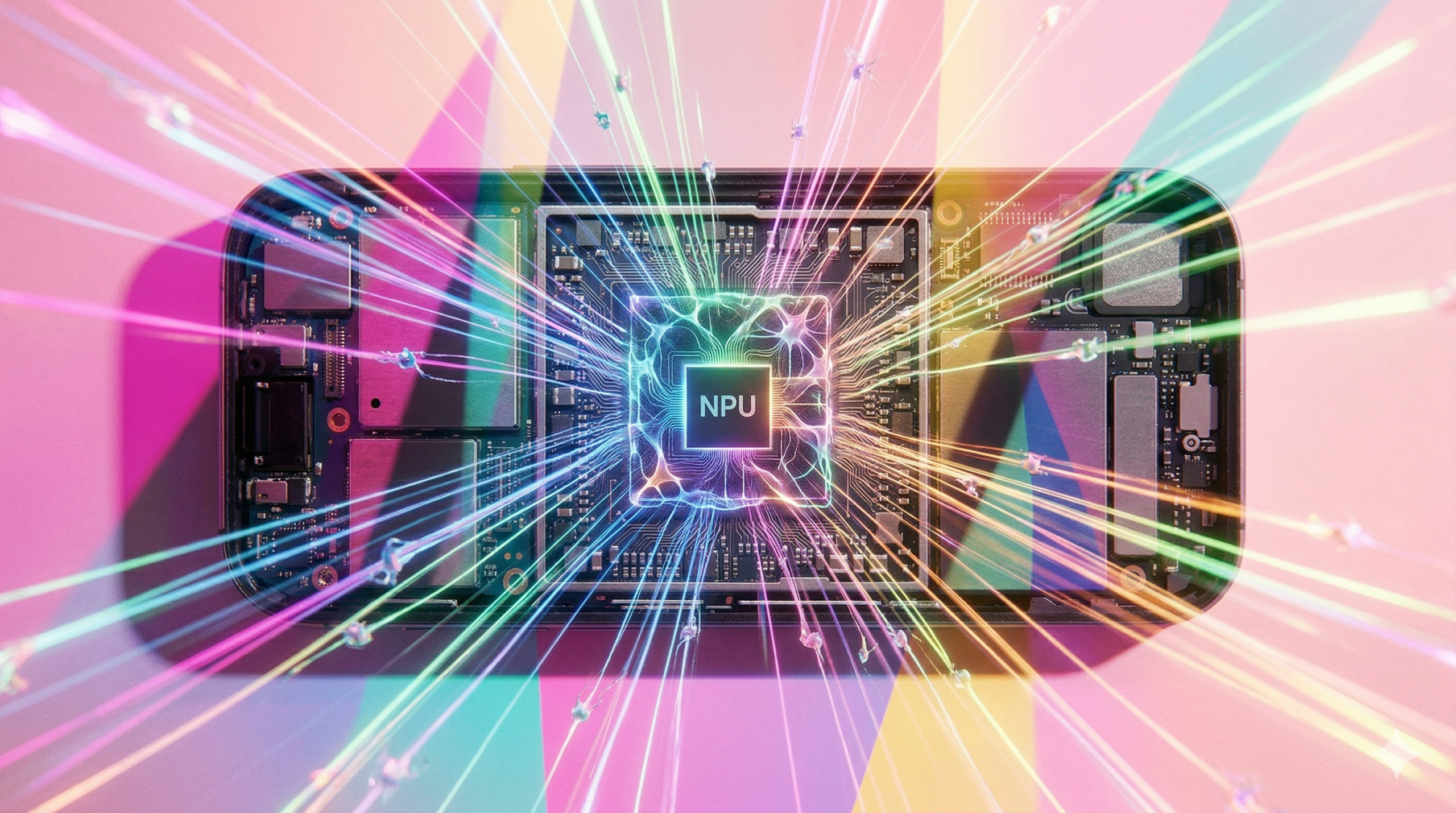
And this is not new. The first NPU was introduced in 2017 when Apple introduced the A11 Bionic chip powering the iPhone 8 and iPhone X.
The A11 Bionic could run machine learning tasks locally and was capable of processing up to 600 billion operations per second at launch. In fact, NPUs were pretty standard in mid-range chips like the Qualcomm Snapdragon 7s Gen 3 and MediaTek Dimensity 7200 after that.
What Can On-Device AI Actually Do on Your Phone in 2026?
Now, this is where on-device AI gets interesting. Here are some examples of what on-device AI powers on your phone.
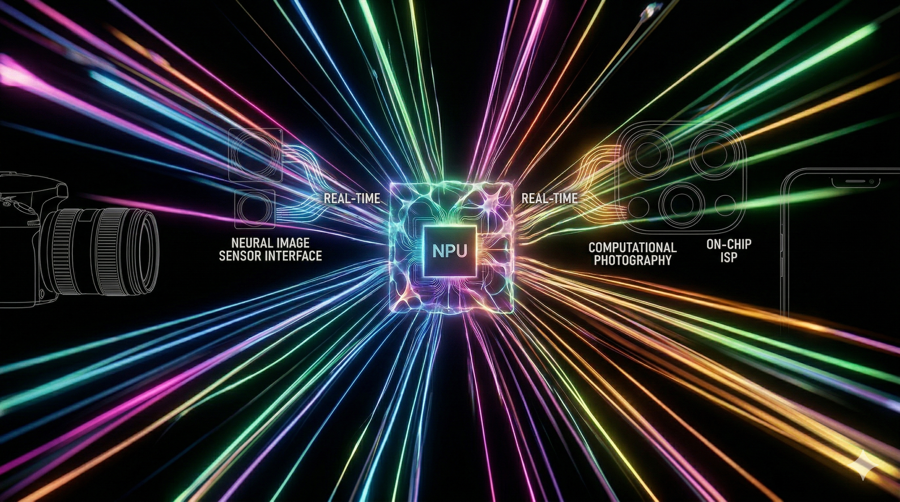
Photography: AI-powered computational photography is the most visible use of on-device AI. From scene detection and real-time noise reduction to portrait mode depth mapping and object removal, these things now run locally on the NPU.
Live Translation: Apple Intelligence supports offline translation between 12 languages, while Google’s Gemini Nano handles offline translation for 5 languages.
Summarisation & Removals: Another example of on-device AI is when it comes to summarising long emails and voice recordings, or removing photobombers from pictures. Both Apple Intelligence and Samsung’s Galaxy AI support this.
Personalisation: Lastly, on-device AI enables your phone to learn your habits, whether it is muting notifications during focus hours or auto-filling forms using context.
Apple Intelligence vs Google Gemini Nano: How Do They Compare?
Apple Intelligence and Google Gemini Nano are perhaps two of the biggest on-device AI platforms in 2026.
Apple Intelligence runs exclusively on-device for core functions, such as Siri rewrites, text summarisation, writing suggestions, and photo analysis. It never uploads prompts unless explicitly opted into Improve Siri & Dictation. Interestingly, it’s known for the lowest on-device AI processing latency.
Gemini Live, on the other hand, uses a hybrid architecture. Its lightweight Gemini Nano model handles basic queries locally. However, complex reasoning or follow-ups mean it will fall back on the cloud.
On the other hand, Samsung Galaxy AI blends both. While some features run on-device via the Snapdragon’s NPU, others tasks are routed through Google’s Gemini cloud infrastructure. Samsung says the real upgrade in the Galaxy S26 Ultra is AI capabilities, with the Qualcomm Snapdragon 8 Elite chip making it faster and more battery-efficient for on-device tasks.
Does On-Device AI Drain Battery?
This is one of the most common concerns. And the answer in 2026 is, No, on-device AI doesn’t drain battery significantly. That said, do note that processing AI locally does require more power than simply sending a text to a server.
Will Your Phone Need More Storage Because of AI?
On-device AI processing creates unprecedented demands for local storage that go beyond traditional app requirements. This is why some phone manufacturers are already exploring models where base storage starts at 256GB.
Is On-Device AI Worth It? Our Verdict
On-device AI is not a gimmick anymore. It is the need of the hour, and the features it enables, from instant photo cleanup to private call transcription, are genuinely useful in daily life. More importantly, it makes your phone smarter without compromising your privacy and faster without needing a strong internet connection.
On-Device AI FAQs
What is on-device AI in smartphones?
On-device AI refers to artificial intelligence that runs directly on your phone’s hardware using a dedicated Neural Processing Unit (NPU).
Which smartphones have the best on-device AI in 2026?
The iPhone 17 Pro (Apple Intelligence), Samsung Galaxy S26 Ultra (Galaxy AI), and Google Pixel 9 Pro (Gemini Nano) are the top performers for on-device AI in 2026.
Does on-device AI work without the internet?
Yes, on-device AI is specifically designed to work offline. Features like live translation, photo editing, text summarisation, and call screening run entirely on your phone’s NPU without needing a network connection.
Does on-device AI drain the battery faster?
Modern chips in 2026 are specifically optimised for on-device AI tasks, and have minimal battery impact