It has happened to all of us — you mention an air fryer at dinner, and by morning, your Instagram feed is filled with ads for air fryers. It feels too precise to be a coincidence, and at this point we have all wondered — is AI listening to your conversations? through the phone sitting on your nightstand?
I have chased this question for years, and 2026 finally gave us something previous debates never had — a federal regulator’s receipt. In May, the FTC settled with a company that had been selling the AI is listening fantasy to advertisers — and proved, in writing, that it never actually worked that way.
At the same time, Google built something that edges suspiciously close to making the myth real. Intriguing, right? Let’s get into both.
So, Is AI Listening to Your Conversations?
The short answer to this question is No. Well, mostly. But the background is more interesting than a flat denial.
So, no major platform, be it Meta, Google, Amazon, or Apple, runs your phone’s microphone in the background to harvest conversations for ad targeting. As a matter of fact, it has been independently tested. A large-scale study by Northeastern University found no evidence of Android apps secretly recording users through their microphones.

That said, that doesn’t mean nothing is listening. Your phone genuinely is always listening for one narrow purpose, and a 2026 leak shows that purpose is about to expand.
How Voice Assistants Actually “Listen”
Before you get your imagination running, let me tell you that your phone’s mic isn’t streaming audio to a server 24/7. Instead, a small, low-power chip runs in the background to perform passive wake-word detection entirely on-device to recognise phrases like Hey Siri or OK Google. And only after that trigger fires does the device start recording or sending audio anywhere.
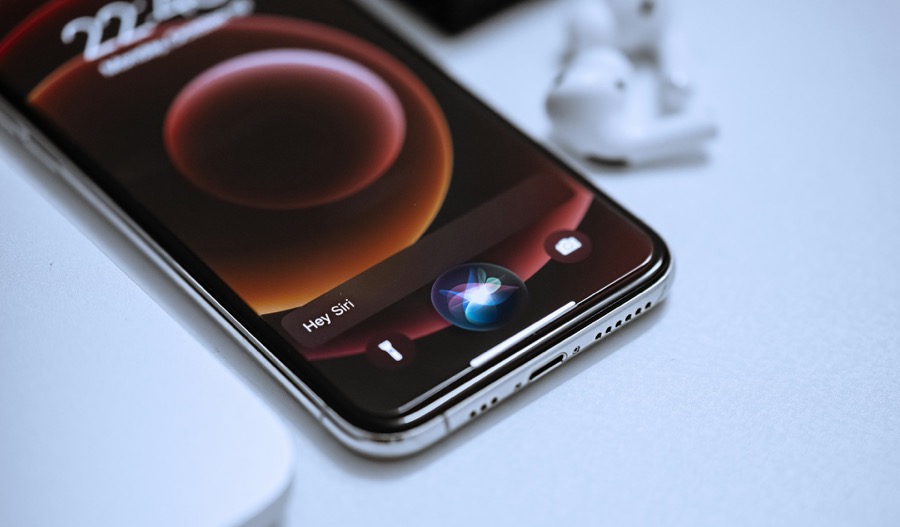
Apple processes this through its Secure Enclave, while Google does it through what it calls the Private Compute Core. Now, this is an isolated sandbox that the rest of the OS can’t access into. But there’s possibility that the system can be quietly expanded without most users noticing.
It’s worth noting that past lawsuits against Apple and Google have revealed that human contractors occasionally review short audio clips to improve recognition accuracy. So while smartphones do listen for wake words, they still do not record your conversations 24×7 for ads.
So Why Do Ads Feel So Eerily Accurate?
If it’s not your mic, what is it? Three boring, unglamorous things, none of which involve sound:
Data broker pipelines: Your purchase history, location data, app activity, and browsing behavior are collected, shared, and combined across advertising and data broker networks. Google uses data from services like Assistant, Search, Maps, and YouTube to personalize experiences and ads, while Apple says Siri data is not used to build advertising profiles. In reality, companies usually do not need your microphone to predict what you might buy because your digital activity already reveals a detailed picture of your interests and habits.

Cross-device and social-graph signals: If your partner searches for something on a shared Wi-Fi network, the platform’s algorithm can connect the dots without ever hearing a word.
Predictive timing: Then comes algorithms that knows more about us. These algorithms are trained to predict what you want, not just what you have said.
As a matter of fact, academic research backs this up. A 2025 Journal of Advertising Research survey of 74 advertising professionals found that while conversation-related advertising is technically feasible, there was no industry consensus that it actually exists in practice.
The 2026 Receipt: The FTC Story
This is the story that settled the debate if AI is listening to your conversations. On May 21, 2026, the FTC reached a $930,000 settlement with Cox Media Group over Active Listening, an AI product that had been pitched to small businesses to capture every casual conversation between two consumers through smart devices and turn it into hyper-local ad targeting.
The FTC’s investigation found the service never touched voice data at all. It was, in fact, a repackaged data-broker email list, marketed with AI buzzwords to justify a markup.
This matters because it’s the strongest real-world evidence to date that even people trying to sell conversation-listening ad tech couldn’t actually build one that worked. If a company with a financial incentive to fake it got caught faking it, that’s a pretty strong tell about what’s technically and commercially viable right now.
The New Wrinkle: When On-Device AI Starts Actually Listening
Here’s where 2026 gets genuinely new. A leaked build of Android System Intelligence revealed a Pixel feature called Audio Memory, which Google appears to be building to keep track of what you hear throughout the day and transcribing them into notes.

And this is what I believe is the real frontier worth watching in 2026 — whether AI assistants will start listening for you and whether that data stays as local as promised.
How to Check (and Limit) What Your Phone Can Hear
A few minutes of housekeeping on your smartphone goes a long way. In Android, you can head over to the Privacy & Security settings and check for the Microphone settings. Here, you can revoke access for anything that isn’t a calling, messaging, or recording app.
Whereas in iPhone, you can go to the Privacy & Security settings and check the App Privacy Report to see which apps actually requested mic access recently.
At the same time, you should always watch out proactively for the mic indicator dot. And if you’re cleaning up app permissions generally, our guide on how to recover a hacked Instagram account and how to use Instagram’s AI features are good companion reads, since most “listening” anxiety traces back to social apps with broad permissions.
FAQs
Does turning off my phone’s mic stop targeted ads?
No. Most targeted ads rely on browsing history, app data, and location, not audio.
Is it illegal for apps to record without telling me?
Yes, in most jurisdictions, the FTC and EU regulators actively pursue this, as the Cox Media Group case shows.