Brief Overview
- Induction is the more energy-efficient option, while infrared offers better compatibility with existing cookware and traditional Indian cooking.
- The right choice depends on your cookware, cooking habits, and whether you prioritise lower running costs or lower upfront expenses.
- Discover which cooktop makes your everyday cooking more fun while being pocket-friendly.
Shopping for a new cooktop is about making a smart investment for your kitchen (and your wallet). At first glance, induction and infrared cooktops may look similar, but they work very differently. This affects everything from cooking speed and energy efficiency to electricity bills and long-term costs. SO should you buy an induction cooktop over an infrared cooktop?
In this post, we look at the primary differences between the both to help you decide which one delivers the best value for your home.
What Is The Difference Between Induction And Infrared Cooktops?
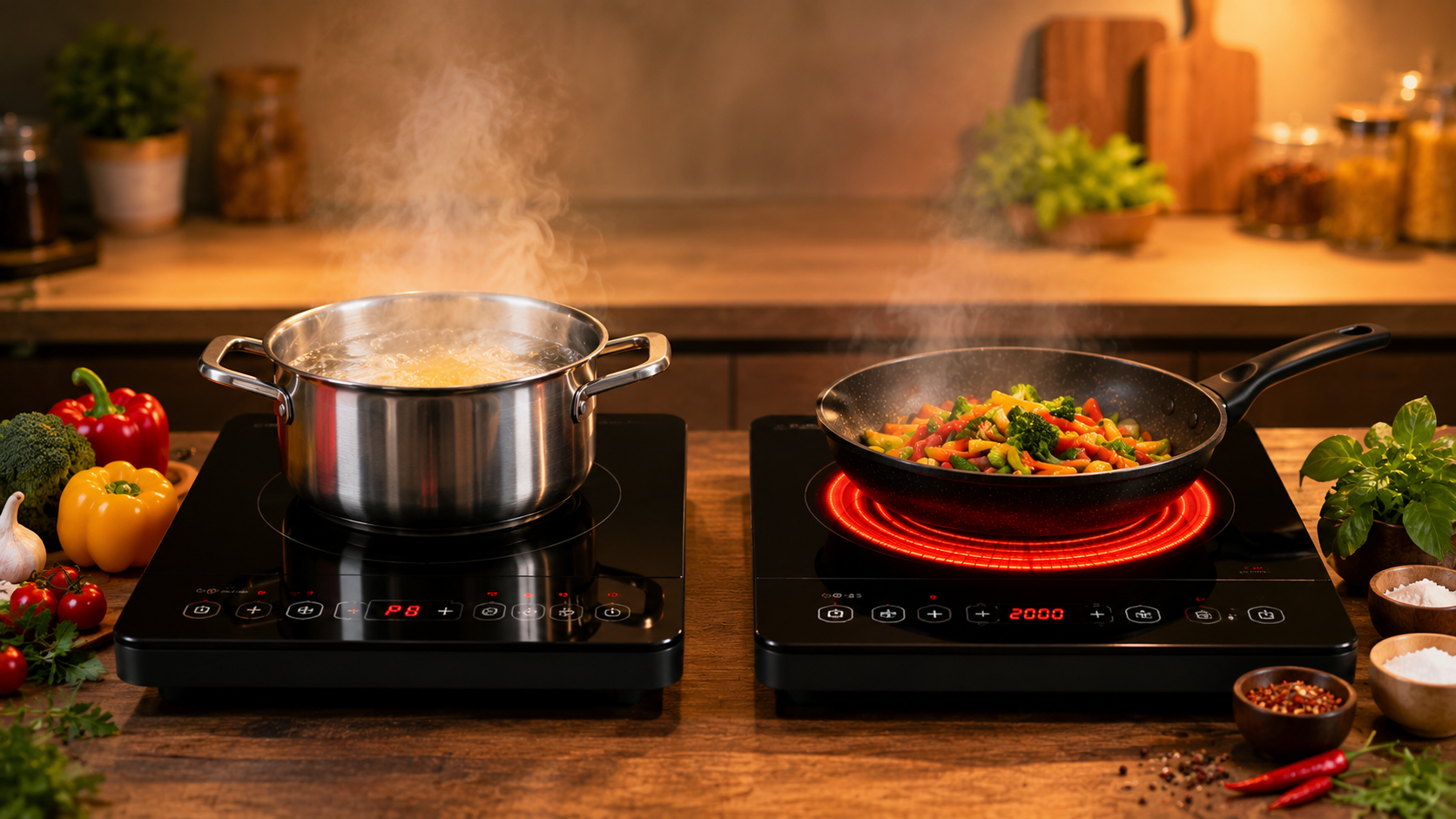
One of the primary differences between the two is that induction cooktops transfer heat directly into the cookware through magnetic induction. The surface doesn’t get hot, but because of this direct transfer, induction is extremely fast. This makes it one of the best energy-efficient cooktops available right now.
On the other hand, infrared stoves use a heating coil that warms up first, then heats the cookware, and then the food. It is a longer process; however, it gives the feeling that you are actually cooking on gas.
Another key factor is induction vs infrared heating speed during everyday cooking. When the heat setting is lowered on an induction cooktop, the temperature drops immediately, without a gradual transition.
On infrared, the coil retains warmth even after the temperature is reduced, so the heat comes down slowly and steadily. For dishes that need controlled cooking, that gradual drop actually makes a real difference.
Cookwares: The Biggest Issue
As you may already know, induction stoves only work with induction-compatible cookware. The aluminium kadai, clay pot, and iron tawa that you ahve already bought will not work. Naturally, replacing everything will cost you extra. This is in addition to the stove price.
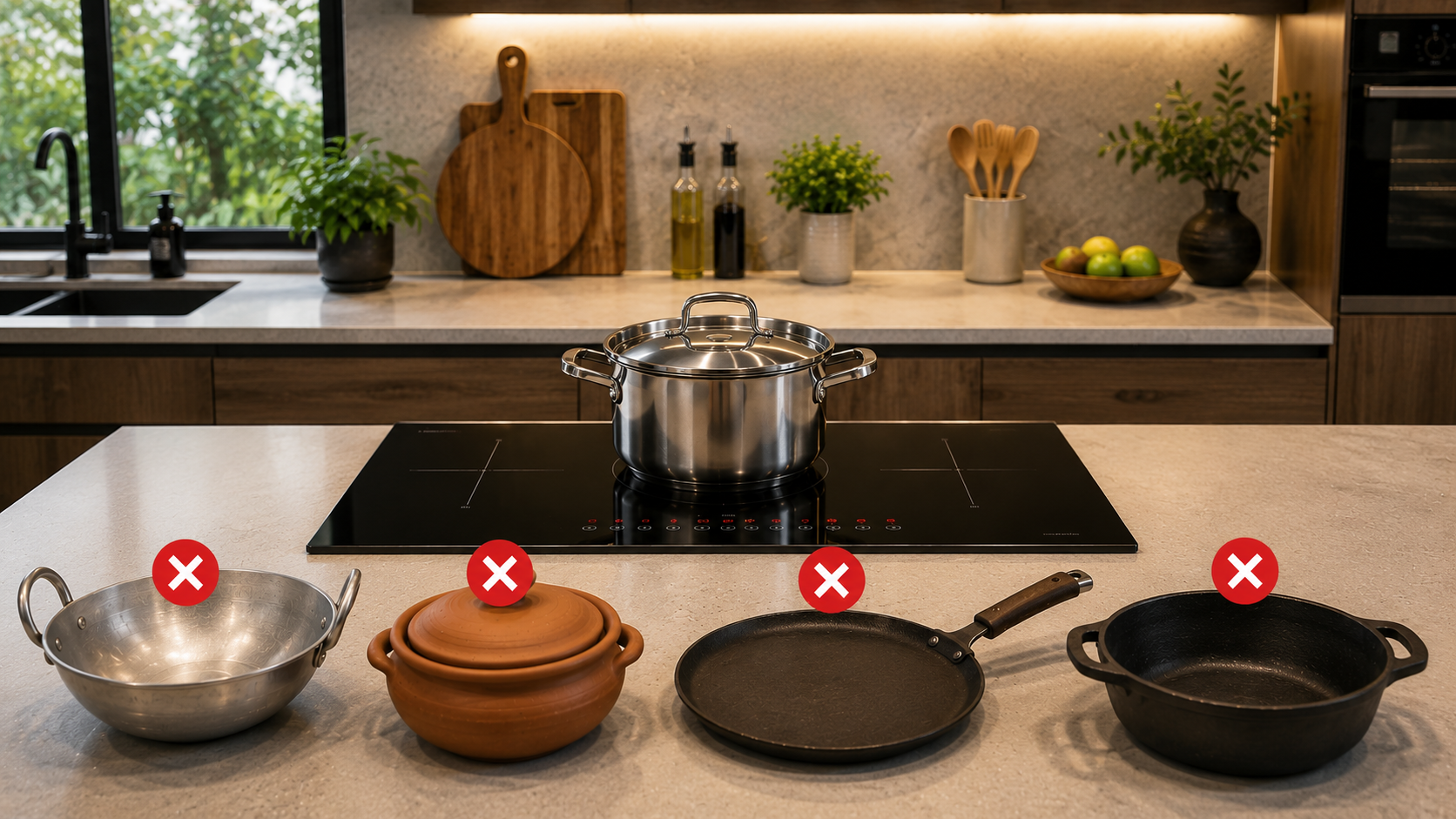
On the other hand, infrared stoves work with literally any cookware you already have. Aluminium, iron, clay, steel- whatever is already in the kitchen.
If you already have induction-compatible cookware, this is not an issue. But if not, the extra cookware cost should definitely be considered before buying one.
Best Cooktop for Saving Electricity
Now, coming to the most important things — Electricity Consumption.
Induction sends heat directly into the vessel with almost no waste. Very little energy escapes into the surrounding air, which is exactly why induction cooktop monthly power consumption stays lower compared to infrared. The kitchen also stays cooler, which in Indian summers means less time running the fan or AC to compensate.
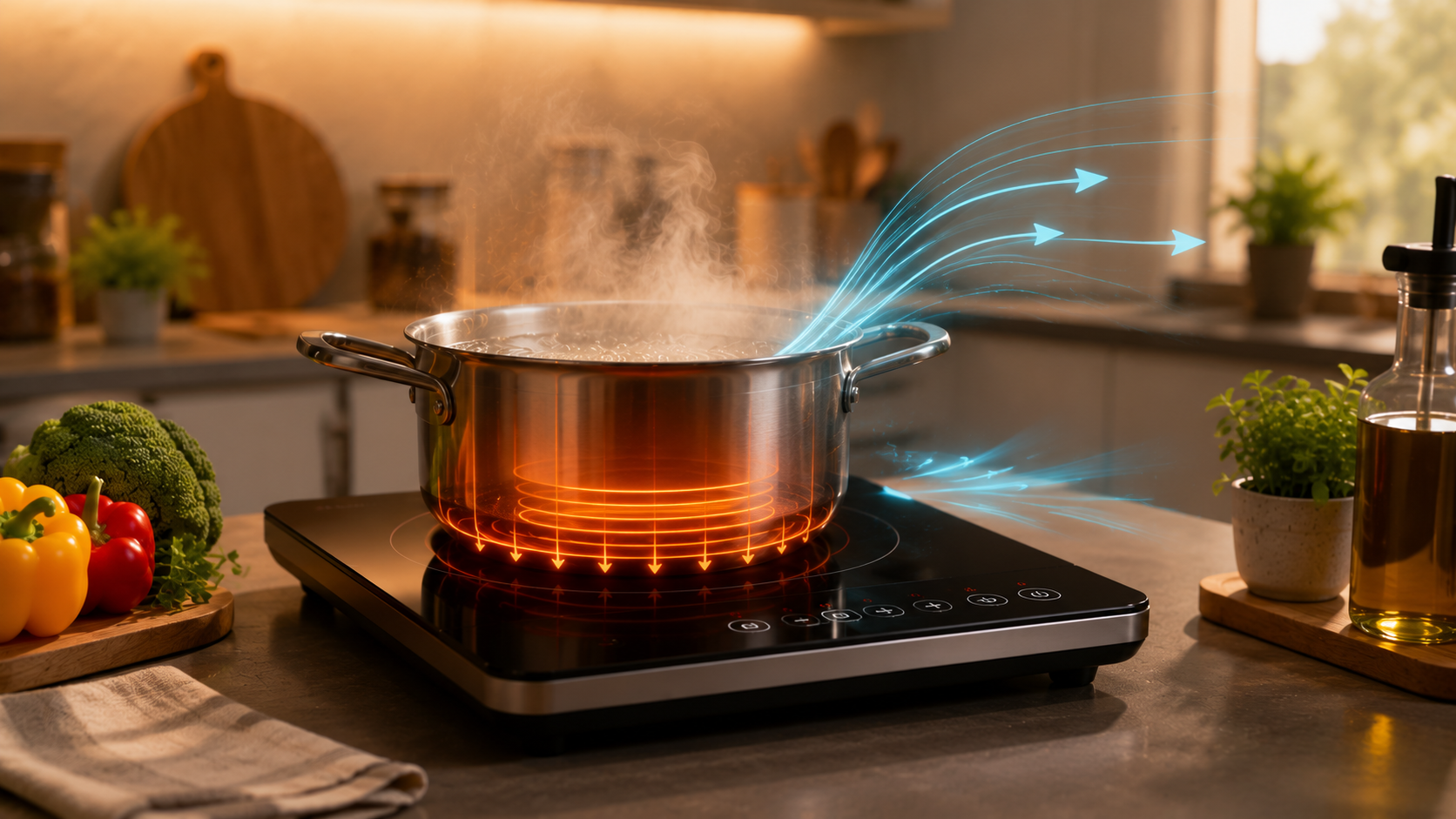
Like a typical gas cooktop, infrared radiates heat outward as it cooks. The coil, the air around it, and eventually the kitchen warm up. That wasted heat means higher electricity consumption overall.
So purely on running costs, induction cooktops is the clear winner for the best cooktop for saving electricity.
What About Rotis?
No comparison between induction and infrared in India is complete without talking about rotis. And this one point alone changes the decision for a huge number of households.
On an induction cooktop, parathas are pretty easy to cook. But phulka or chapatis, unfortunately, will not puff up. Since there is no direct flame, rotis do not puff up the same way they normally do on a gas stove.
But things are different on an infrared stove and in a good way. Rotis can be placed directly on the coil and puffed up almost exactly like on a gas stove. Long story short, for traditional Indian cooking, infrared is genuinely more versatile and easier to use.
Safety and Ease of Use
Both stoves come with timer options and adjustable heat intensity settings, so everyday use is comfortable on either. Higher-end models on both sides offer more advanced controls and cooking modes.
For the best infrared cooktop 2026, look for models that include a dedicated BBQ mode, a good-quality glass surface, and reliable heat controls. The glass quality matters a lot because infrared glass tends to be thinner and more prone to breaking.
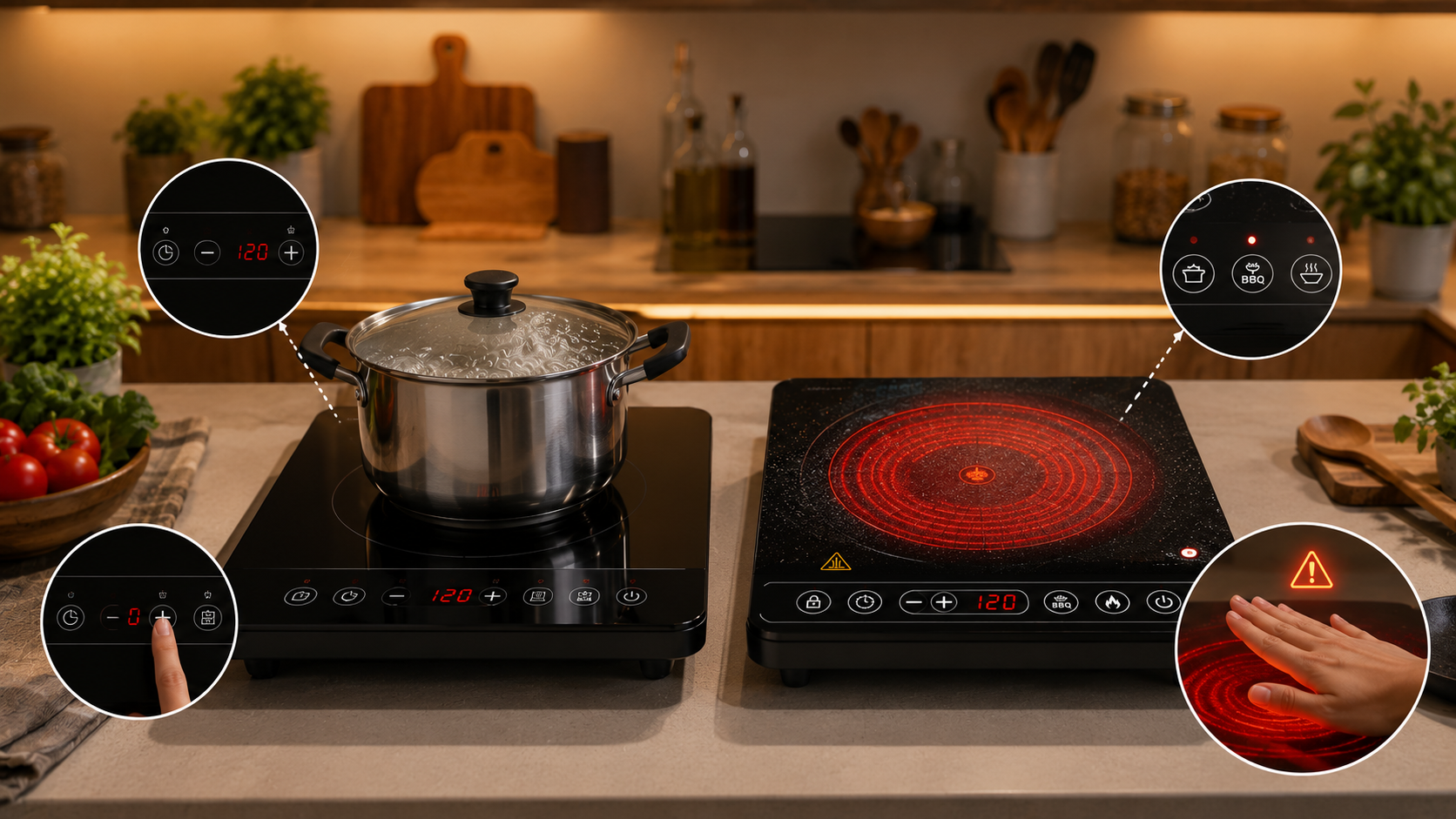
On the safety side, infrared surfaces get very hot during and after cooking, exactly like gas. Touching the surface too soon after cooking is a genuine burn risk. Induction surfaces are slightly safer and easier to clean, since they do not directly generate heat.
So Which One Is Actually Worth Purchasing?
So these were some of the primary differences between an induction cooktop and an infrared cooktop. If you ask me, the right choice depends on your budget, cooking style, heat control preference, and existing kitchen appliance setup.
Induction makes more sense for you if you already own compatible cookware. It is more efficient, keeps the kitchen cooler, and genuinely is the best energy-efficient cooktop for daily use. That said, if phulka rotis are a must every day, infrared makes more sense for anyone without induction-compatible vessels at home.
FAQs
What is the difference between induction and infrared cooktops?
Induction heats cookware directly through magnetic energy, while infrared uses a heating coil that warms up first and then transfers heat to the vessel.
Which cooktop saves more electricity, induction or infrared?
Induction saves more electricity because it transfers heat directly into the vessel with almost no energy wasted into the surrounding air.
Which cooktop heats food faster?
Induction heats food faster because the heat goes directly into the cookware without any intermediate steps, unlike infrared, which heats the coil first.