Brief Overview
- Google has introduced new Gemini models with stronger multimodal understanding and reasoning.
- Agent platforms like Antigravity and developer tools are revealed to build secure, task-taking AI apps.
- AI agents are rolling out across Search, Photos, Workspace, Chrome, and Cloud for everyday tasks.
At Google I/O 2026, Google took a bold step forward in bringing AI into everyday life. The company unveiled a wave of innovations, including new Gemini models, an upgraded agentic platform called Antigravity, powerful developer tools for building agent-powered apps, and major advances across Search, Photos, and Android.
Let us take a look at Google’s announcements in detail for enhancing the AI experience of the users.
Gemini Omni and Gemini 3.5
First of all, Google introduced Gemini Omni, which is an AI model focusing on understanding and creating various types of content to fill the gap.
With Omni, you simply need to provide a prompt. You will also be able to combine images, audio, video, and text as input and generate high-quality videos. You can also easily edit your videos through conversation.
On the other hand, Gemini 3.5 combines high-level reasoning with the ability to take actions in apps and services. This means it can handle coding and automation at the same time, which can be a helpful model for the devs.
Google’s AI Agents: Beyond Chatbots
Looking at the I/O innovations, Google has made it clear that it is moving from simple AI helpers to agents that can act on your behalf. For instance, the Antigravity platform lets builders combine smaller subagents to complete complex workflows. Plus, it also includes security features like credential masking and sandboxing.
Other than that, Google also introduced Managed Agents in the Gemini API. This will allow developers to get fully provisioned AI agents (that can reason, use tools, or execute code) through a single API call.
Developer-friendly Tools
Google has also rolled out new developer tools to make agent-powered apps easier to build. For instance, Google AI Studio added native Kotlin support and one-click deploys to Cloud Run, letting developers create full-stack apps quickly and even export project state into Antigravity.
Additionally, a stable Android CLI and open-source Android skills let agents run Android tasks such as downloading SDKs or testing apps, which should speed up app development and QA.
Web and Browser Upgrades
As part of Google I/O 2026, the company has also proposed WebMCP, an open web standard to allow web-based agents to run structured tools like JavaScript functions and HTML forms. This, in turn, will make AI-powered browsing faster, accurate, and far more efficient for developers.
The in-house browser, aka Google Chrome, will soon start trials of this feature. Other than that, Google also added Chrome DevTools features for agents, so AI agents can debug, test, and optimize web pages automatically.
AI Across Google products
As we all know, Google is integrating Gemini into many products, ranging from Search and Photos to new form factors like eyewear.
Some of the examples include Information agents in Search, a Gemini Spark feature in the Gemini app, and a new Universal Cart that aims to create an intelligent shopping experience across Google services.
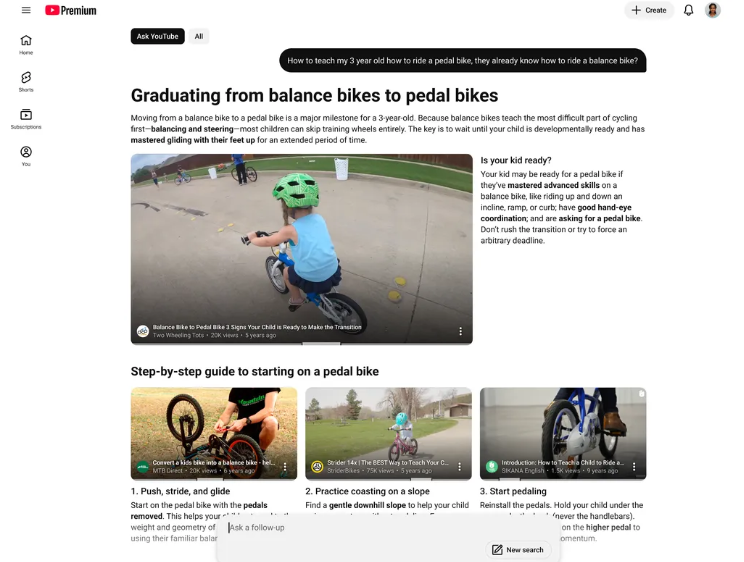
Google also highlighted features such as Daily Brief and Ask YouTube that use Gemini to give smarter, task-focused results.
Enterprise and Cloud Moves
Google Cloud also presented enterprise-ready features such as Gemini Enterprise and agent platform tools for businesses.
These tools are designed to help companies build secure, scalable agent solutions on Google Cloud, bringing agent capabilities into workplace apps and enterprise workflows. Other than that, new web technologies like HTML-in-Canvas were also showcased to help build immersive 3D web apps that are searchable and accessible.
Google I/O 2026: The Everything-Gemini Era
Google’s main aim with these announcements points towards more capable AI that can do real tasks for people, not just suggesting words and ideas.
For the developers, it gets easier to build and deploy agent-driven apps, and the daily users should see smarter features in everyday Google products like Search, Photos, and Workspace.
Overall, Google I/O 2026 focused on turning advanced AI into useful, secure, and easy-to-build tools that work across devices and the web and make everyday tasks easier for users.
FAQs
What is Gemini Omni announced at Google I/O 2026?
Gemini Omni is Google’s new multimodal model that can create content from many input types, starting with video, and is described as a major step forward in world understanding and editing.
How did Google improve Search at Google I/O 2026?
Google added more agentic AI to Search, including information agents that can monitor the web and help make search more proactive and useful.
Was Google I/O 2026 focused mainly on AI?
Yes, Google I/O 2026 was heavily centered on AI, with Gemini models, AI agents, and AI features across Search and other products taking the spotlight.