
Travel planning is supposed to be fun, but more often than not, it turns into a never-ending spiral of tabs, blogs, endless YouTube vlogs, and outdated TripAdvisor threads. So, when I decided to spend a few days in Kuala Lumpur last August, I thought I would try something different — using ChatGPT for travel planning.
With the rise of the powerful AI tools, I thought, why not test the hype? So, instead of booking tours or relying on glossy Top 10 Things to Do/See lists, I asked ChatGPT to act as my travel assistant and to make me a customized itinerary.
Was I glad? Well, read on to find out.
Also See: How to Get ChatGPT to Write Like a Human: The Complete Prompt Engineering Guide (2026)
What I Liked About Using ChatGPT for Travel Planning
The first thing I appreciated was how quickly ChatGPT understood my preferences. I told it upfront that I was not interested in touristy malls, touristy shopping streets, and malls. Instead, what I wanted was culture, charming old roads & neighborhoods, with a bit of local food destinations thrown in.
Almost instantly, ChatGPT laid out a list of suggestions, such as exploring Kampung Baru’s traditional Malay wooden houses, strolling around Chinatown’s Petaling Street, or wandering around Bukit Bintang’s back lanes for murals.
What threw me was that it didn’t just stop at “visit the Petronas Towers” or “shop at Pavilion Mall”—it actually mapped out experiences that aligned with my preference to skip the travel traps.

For example, suggestions like “Guan Di Temple, lunch at Restoran nasi ayam kam kee” are what set my experience apart. Plus, additional descriptions like “Kwai Chai Hong: Discover the vibrant street art and historical alleyways” meant I didn’t have to do an additional Google Search to see what those streets were popular for. Alternatively, suggestions like “Optional: Evening stroll around KLCC Park. Note: Check local schedules.” meant I didn’t end up at the wrong time.

In short, it laid the groundwork for me to build upon. The food suggestions were especially spot-on, adding real value to the experience. That said, I did not prompt it for commute details, since KL is known for its traffic, and I preferred to plan that part myself.
The AI was like a patient listener who didn’t roll its eyes when I said I wanted to avoid malls. This travel planner took my inputs seriously and spun them into a personalized plan that felt more “me” than “standard guidebook.”
Also See: The Best ChatGPT Alternatives You Should Try in 2026
What I Disliked (and Where It Fell Short)
Asking ChatGPT to make a travel plan has been a topic for debate among travelers and content creators since the beginning. And well, let me tell you that it wasn’t all perfect.
For one, the itinerary it gave me wasn’t flawless on the first attempt. So, while the AI did give me a good starting point, I had to tweak and refine the suggestions or add to them to come up with the final itinerary.
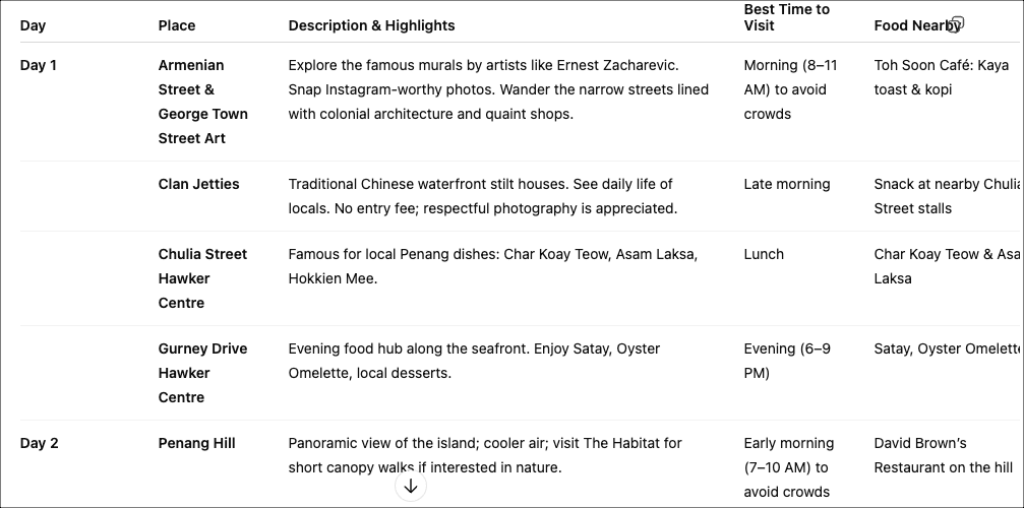
For instance, it placed Batu Caves even though I did not want to visit a touristy place. This meant I had to keep revising the plan. I would tell it: ‘Can you remove Batu Caves?’ or ‘Merge X and Y.’ While it listened, the process was iterative. Unlike a human travel agent who might anticipate these hiccups, I needed to steer it with feedback actively.
Again, this meant that using this AI agent was both a time-saver and a time-consumer. It saved time compared to scrolling through endless blogs and forums and deciding whether I should trust the creator or the video. But it also demanded my time, particularly when it came to refining the itinerary.
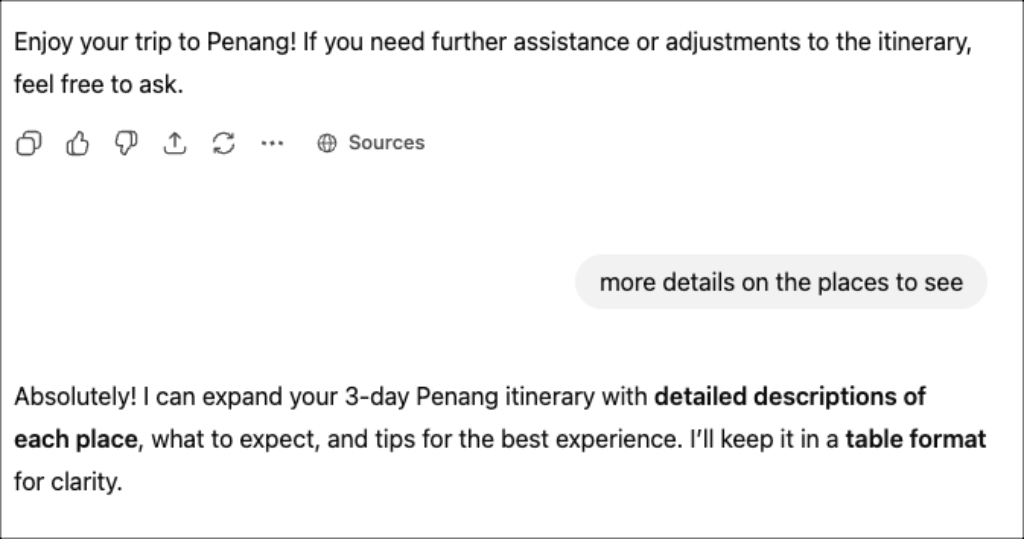
It is not a one-and-done process. You just cannot expect it to make you a foolproof travel plan. Instead, it becomes your partner. That is not necessarily bad, but you need to be ready to invest some effort.
You just cannot expect it to make you a foolproof travel plan
However, things do get a bit synthetic. For example, when you watch a travel video on YouTube, you actually get to know about the experiences. It can tell you about the vibrant chaos of Jalan Alor, but it cannot describe the beautiful aroma of food being cooked or the serenity you feel when you visit the Chin Swee Caves Temple. For that, you will always need firsthand travel advice from travelers who have been there.


But what I can say is that it lays the groundwork or the basic structure, so you do not have to waste time searching for every place under the sun.
Why It Still Works Better Than Traditional Searching
That said, I found myself using ChatGPT more than I thought I would, mainly because it consolidated everything. Normally, to create a travel itinerary, I would read through travel blogs, open Google Maps to see how far away the places are, or go through quite a few YouTube videos for food and travel spots. With the new process, almost everything was in one place with just a few extra tabs.
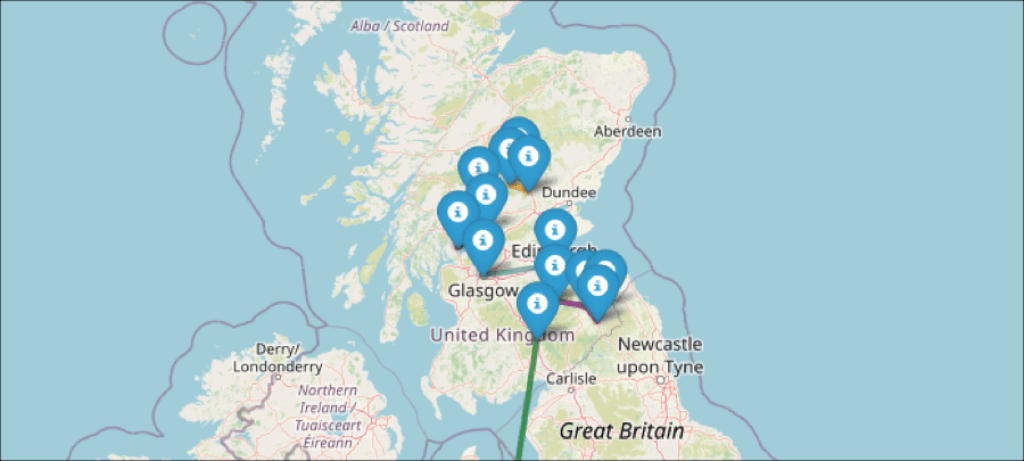
Sure, I had to refine it, but once I did, the plan was cleaner and more customized. For example, during another travel planning session, it even gave me an HTML file to show how far away the places are, and for better visualization. Also, you can create a downloadable version for easy reference later.
Wrapping Up
At the end of the day, using ChatGPT as my travel agent for Kuala Lumpur was a fascinating experiment. It did not hand me a flawless itinerary on the first try, but with my feedback layered in, it gave me a solid travel plan that combined food, culture, and charming streets while skipping the tourist fluff.
While it asks questions, it cannot replace the instinctive intelligence of a travel agent or the real-life experience of a seasoned traveller. But it does offer something valuable — a rough yet structured framework you can build on, and it is a very handy starting point.