
Samsung recently announced that it is eyeing the release of the industry’s first 2nm chipset, which will be known as the Exynos 2600. Samsung officially announced that it is developing the 2nm chipset built on Samsung Foundry’s GAA process.
The Exynos 2600 is already in the mass production phase, with an expected debut in the Galaxy S26 and Galaxy S26+ early next year. However, the global variant of the Galaxy S26 Ultra may still come with a Snapdragon chipset.
See Also: How to Share Files Between Samsung and iPhone
CPU and Geekbench Scores
The Samsung Exynos 2600 features a 10-core setup on Arm’s v9.3 architecture, with one Prime C1 Ultra core clocked at 3.80GHz, three C1 Pro cores at 3.26GHz, and six additional C1 Pro cores at 2.76GHz.
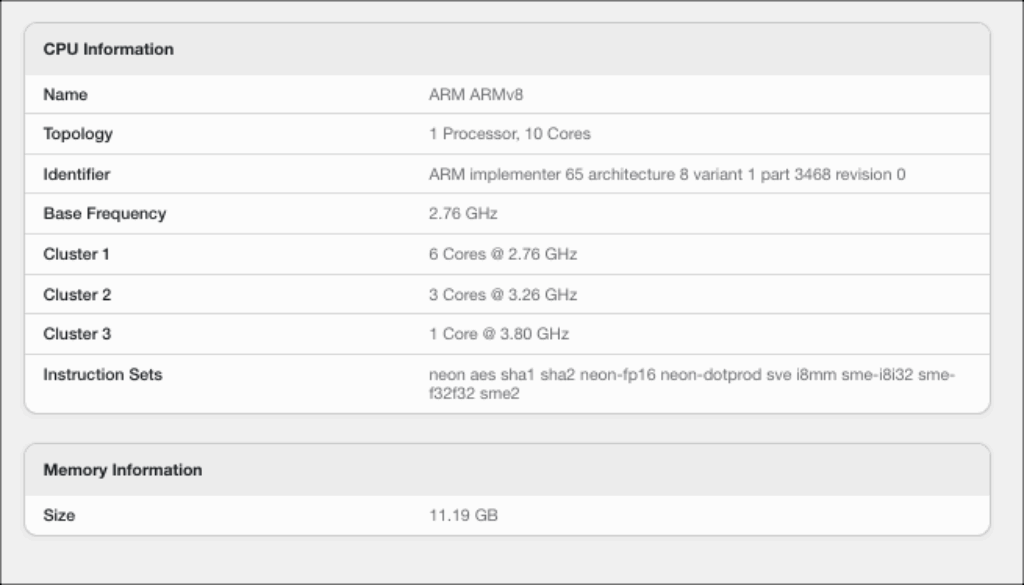
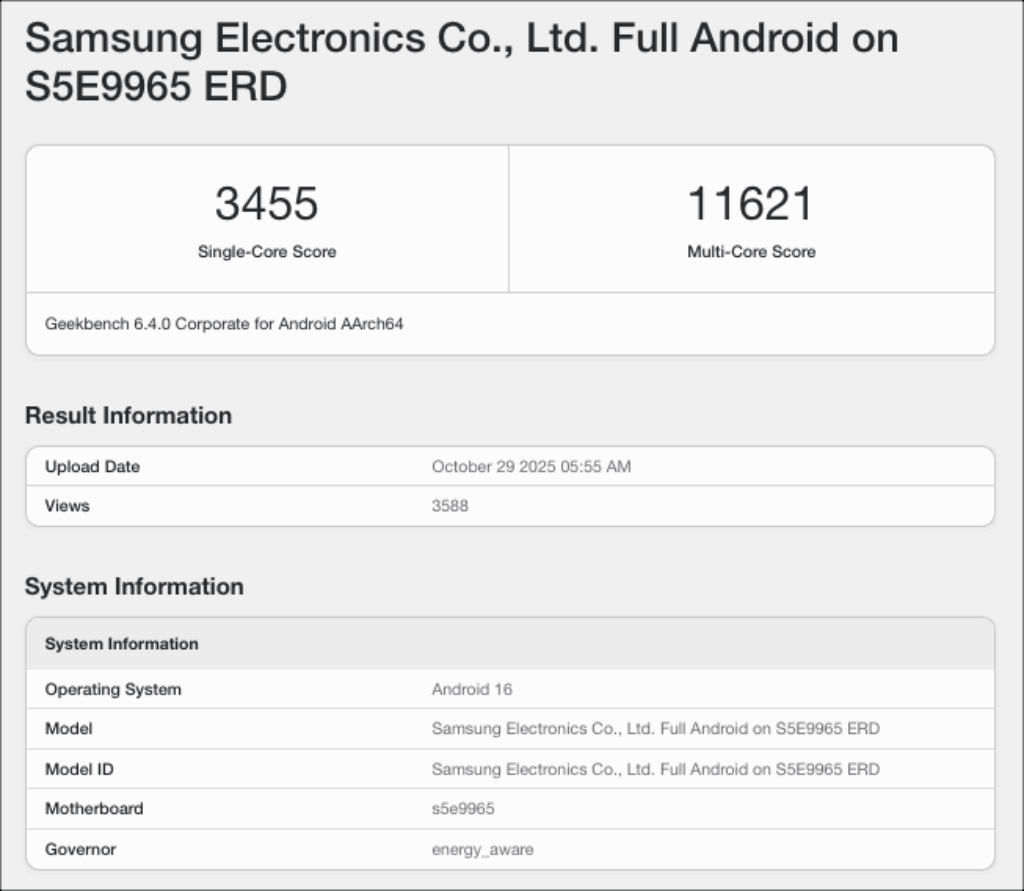
Samsung claims that the Exynos 2600 will deliver a 39% CPU boost compared to the previous Exynos 2500. Some other rumours and leaks hint at Geekbench scores around 3,500 for single-core and 11,500 for multi-core, which could potentially outperform rivals like the Snapdragon 8 Gen 5.
See Also: Qualcomm Snapdragon 8 Gen 5: 5 Top Things to Know
GPU and Gaming Upgrades
Gamers and graphics fans can expect a great experience with the Xclipse 960 GPU, co-developed with AMD. This new GPU promises a 50% increase in ray tracing performance compared to its predecessor.

The Xclipse 960 GPU is clocked at around 985MHz with Vulkan 1.3 support and pairs with Exynos Neural Super Sampling (ENSS) for AI-driven frame generation and upscaling. It is expected to run high-frame-rate games with minimal battery drain.
In short, users can expect a smooth experience with 4K@120Hz HDR gaming and playback on compatible displays.
See Also: SparkNherd Explains: What Makes a Smartphone Display Truly “Flagship Grade”
AI and Camera Specifications
On the imaging side, Samsung Exynos 2600’s ISP supports up to 320MP sensors, 108MP zero-shutter-lag shots, and 8K@30fps or 4K@120fps HDR video with the APV codec.
Other than that, features like real-time eye-blink detection and low-light noise reduction are also supported, all with 50% lower power consumption.

The AI performance is expected to improve, with the NPU supporting larger on-device models and Arm’s SME2 for low-latency ML tasks. New virtualization security features and hybrid Post-Quantum Cryptography are also expected to enable safer AI operations.

Thermal Fix and Efficiency
Samsung has also introduced the Heat Path Block (HPB), a novel high-k EMC material that stops the buildup of heat and helps in keeping the chipset cool for smooth performance. In addition, it is paired with UFS 4.1 storage and LPDDR5X RAM.
Read Also: UFS 5.0 Is Coming: How it will Revolutionize Smartphone Performance
Rivals Chasing the 2nm Crown
Samsung is among the first processor makers to take a bold step in the chipset market by developing a 2nm processor, with mass production expected to begin in 2026. That said, it remains unclear when a 2nm chipset will actually reach devices, as the timeline depends on the broader semiconductor industry.
In September, MediaTek also issued a press release stating that it is developing a 2nm processor, which has been taped out based on TSMC’s N2P process and is expected to feature in late 2026 flagship launches.
Apple has delayed 2nm processors to its A20 series in 2026, securing early TSMC supply after using the 3nm N3P process for the A19. At the same time, rivals like Qualcomm also plan to develop a 2nm Snapdragon 8 Elite Gen 6, though nothing has been officially confirmed yet.
Samsung Exynos 2600: FAQs
What is Samsung Exynos 2600?
The Exynos 2600 is a 2nm smartphone chipset.
Why is the Exynos 2600 called the world’s first 2nm chipset?
Based on the information we have at the moment, Samsung will be the first one to begin production of the 2nm chipset.