Brief Overview
- Sanchar Sathi promises stronger protection and fewer cyber scams.
- It has been developed by India’s Department of Telecommunications (DoT).
- The app uses IMEI and SIM-level data to give consumers better visibility and control
India’s digital world is moving at lightning speed, and suddenly, telecom security has become the center of everyone’s conversation. The government’s Sanchar Sathi app, which started as a simple, optional safety tool, is now back in the spotlight after new rules asked smartphone makers to pre-install it on all devices, old and new. While the app promises stronger protection and fewer cyber scams, the big question is — is Sanchar Sathi really a helpful security tool?
What is Sanchar Sathi?
Sanchar Sathi is an official platform developed by India’s Department of Telecommunications (DoT) to help users secure their mobile devices and protect their telecom identity. The platform itself was first introduced in 2023 as a web portal, and later expanded into a full-fledged mobile app.
At its core, it uses IMEI and SIM-level data to give consumers better visibility and control over their devices and mobile connections.
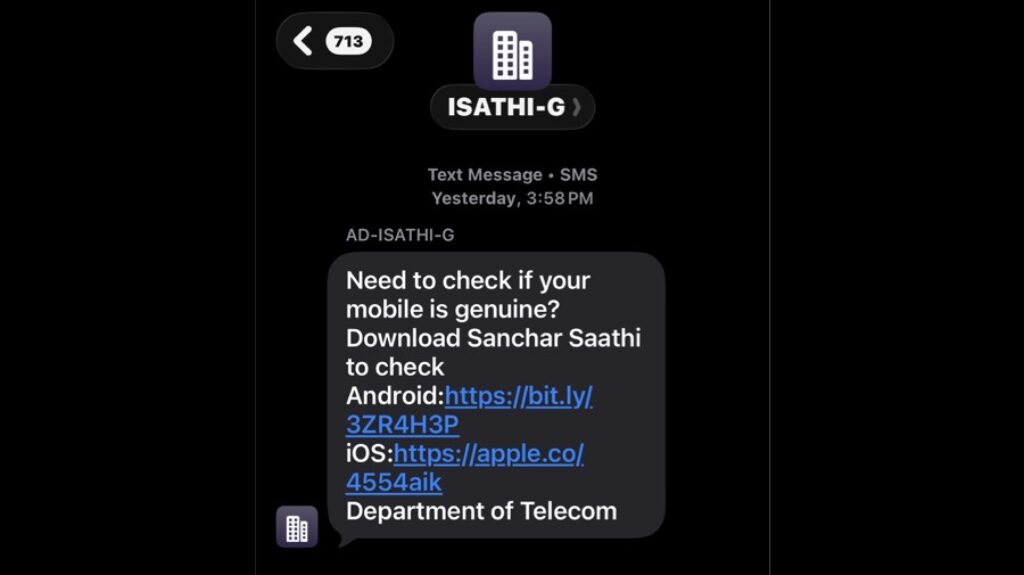
Now, the tool is being positioned as a public-focused cybersecurity measure, designed to tackle the surge in cyber fraud, rising phone thefts, and the growing misuse of mobile connections.
The DoT has also emphasized that the Sanchar Saathi app’s safety checks have already helped block and trace a significant number of stolen devices and detect countless fraudulent SIMs. Because of this expanded role, the government now wants the app to come pre-installed on every smartphone sold in India going forward.
Sanchar Sathi App: Facts
1. CEIR (Central Equipment Identity Register)
CEIR allows users to block or trace lost and stolen mobile phones by using the device’s IMEI number. Once reported, the smartphone becomes unusable on Indian networks, reducing its value for thieves and other scammers.
2. IMEI Verification
Apart from the above, you can also check and verify whether a device’s IMEI is genuine or has been reported previously. This helps reduce the circulation of grey-market devices and also protects you if you are planning to buy a second-hand smartphone.
3. Know Your Mobile Connections (KYM/KYC Check)
With the Sanchar Sathi app, you can also view the full list of mobile numbers issued in your name. Naturally, this puts things in your control by making it easier to spot any fraudulent connections.
4. Reporting Fraud and Spoofed Calls
Another Sanchar Saathi App safety check is the ability to flag scam calls, suspicious SMSes, and international calls that show up with Indian numbers due to spoofing. This directly supports the government’s growing crackdown on cyber fraud networks.
5. SIM Misuse and Deactivation
At any time, through the Sanchar Saathi platform, users will also be able to detect abnormally high SIM registrations against a single ID, and this will help in limiting misuse from fake or illegally obtained SIM cards.
On paper, all these Sanchar Saathi App safety checks make it a potentially strong consumer-protection tool.
Cybersecurity or Better Tracking?
Now, this is where the real debate begins. In December 2025, the DoT also issued a directive asking smartphone manufacturers to pre-install the Sanchar Sathi app on all devices or to include that through OTA updates for existing users.

Data Collected and Stored
That said, even if the app can now be uninstalled (as clarified by the government), the idea of pushing a government service by default is intrusive. At the same time, there is a lack of transparency.
The app is not open-source, and there has been no independent audit of how data is collected or stored. This leaves users uncertain about whether the tool strictly sticks to anti-fraud functions or if it has additional undisclosed capabilities.
Potential for Surveillance
Because Sanchar Sathi links device IMEI, SIM registration, and telecom metadata, the platform could potentially enable state‑level tracking of devices and communications. At the same time, the absence of privacy‑by‑design documentation leaves users with few options if their data is mishandled or misused.

Worse still, with any online system, there is always the risk that hackers may break in and exploit the data. In fact, India has already seen major leaks in government‑linked databases. For example, large‑scale breaches involving the Unique Identification Authority of India (UIDAI)’s identity database and other public data repositories.
Conclusion
At the time of writing, the Sanchar Sathi app sits on a delicate fault line. The app undeniably offers practical benefits, especially when cybersecurity fraud and scams are on the rise like never before. As such, it could become a valuable tool for millions.
However, technology meant to protect citizens must also respect their autonomy and privacy. The app and the government should therefore be transparent in their operations, providing clear and open communication about how data is collected, stored, used, and what plans exist for its future use. After all, as we all know, data is the new currency.